Introduction
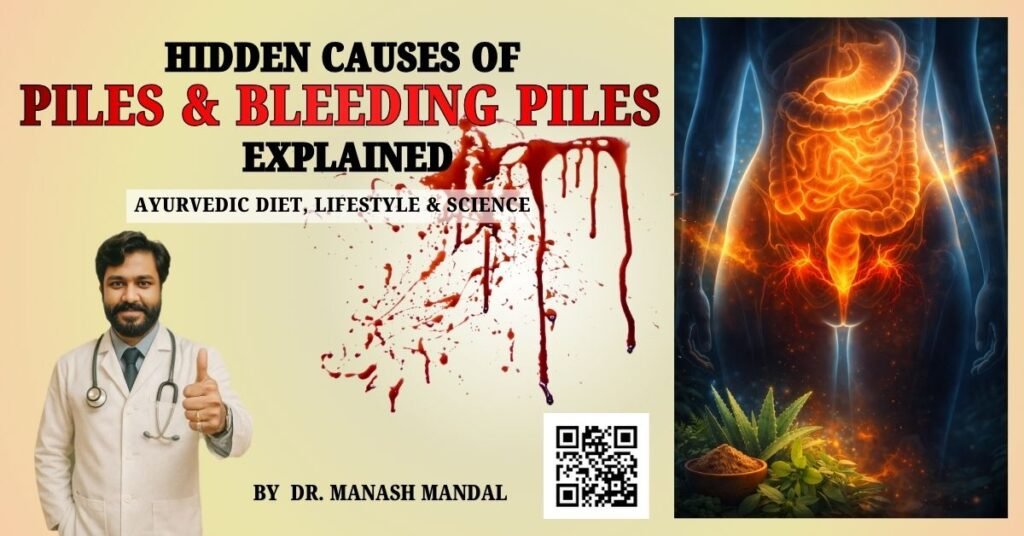
Piles, medically known as hemorrhoids, are one of the most common yet least openly discussed health problems. Pain, bleeding during stool, itching, and fear of surgery often push people toward panic rather than understanding.
Most people focus only on the visible symptom — bleeding — while ignoring the deeper causes. This article explains the hidden causes behind piles and bleeding piles, using Ayurveda and modern medical science, in a way that is practical, non-fearful, and corrective.
What Are Piles?
Piles are swollen and inflamed veins in the rectal and anal region caused by increased pressure, poor circulation, and tissue weakness.
Types of Piles
Internal piles – inside the rectum, often painless but bleed
External piles – outside the anus, painful and itchy
Bleeding piles – usually internal piles with fragile blood vessels
Bleeding piles do not automatically mean cancer or surgery.
The Real Problem: Why Piles Keep Coming Back
Piles are not just a local disease. They reflect digestive, vascular, and lifestyle imbalance.
Treating only the swelling without correcting the cause leads to:
Hidden Causes of Piles (Most People Miss These)
 Chronic Constipation (Root Cause)
Hard stools create excessive pressure in the rectal veins, leading to:
Constipation is often due to weak digestion, dehydration, and poor diet, not lack of laxatives.
 Weak Digestive Fire (Mandagni)
In Ayurveda, weak digestion leads to:
Improper stool formation
Sticky, dry, or hard feces
Straining during bowel movement
This weak digestion also causes Ama accumulation, which worsens inflammation.
 Prolonged Sitting & Sedentary Lifestyle
Long hours of sitting:
This is common in office workers and drivers.
 Suppression of Natural Urges
Frequently delaying stool urges causes:
Ayurveda considers this a direct cause of anorectal disorders.
 Excess Heat & Pitta Aggravation
Bleeding piles are strongly linked to Pitta Dosha imbalance.
Signs include:
Spicy food, alcohol, excess tea, and stress worsen this condition.
Ayurvedic Understanding of Piles (Arsha)
In Ayurveda, piles are known as Arsha, caused by:
Vata imbalance (straining, dryness)
Pitta imbalance (bleeding, inflammation)
Weak Agni (poor digestion)
Ayurveda treats piles by correcting digestion, stool consistency, and circulation, not just shrinking veins.
Modern Medical Explanation (Simplified)
From a modern medical perspective, piles develop due to increased pressure in the rectal venous plexus, leading to vein enlargement and fragility. Chronic constipation, prolonged sitting, obesity, and pregnancy are known contributors.
Bleeding occurs when fragile veins rupture during stool passage. According to medical understanding of digestive and vascular health, improving bowel regularity, reducing straining, and correcting lifestyle factors are key to long-term management.
Why Bleeding Piles Should Not Be Ignored
Occasional mild bleeding may occur, but persistent bleeding requires evaluation to rule out:
Early correction prevents complications.
Ayurvedic Management Principles
Ayurveda focuses on root-cause correction, not symptom suppression.
Core Principles
Strengthen digestion (Agni Deepana)
Soften stools naturally
Reduce inflammation and heat
Improve rectal circulation
Correct lifestyle habits
Treatment is personalized, not generic.
Lifestyle Measures That Help
When Surgery Is NOT Required
Most piles:
Surgery is considered only when:
Piles are large and prolapsed
Bleeding is severe and persistent
Conservative treatment fails
Frequently Asked Questions (FAQs)
1. Is bleeding piles dangerous?
Not usually, but persistent bleeding needs evaluation.
2. Can piles be cured permanently?
Yes, if digestion and lifestyle are corrected.
3. Does piles always need surgery?
No. Most cases do not.
4. Is piles caused only by constipation?
Constipation is the main cause, but not the only one.
5. Can Ayurveda treat bleeding piles?
Yes, when applied correctly and early.
Conclusion
Piles and bleeding piles are not sudden diseases. They develop slowly due to digestive weakness, lifestyle errors, and vascular stress. Treating the root cause is the only way to achieve long-term relief.
Understanding replaces fear.
Correction replaces dependence.
That is true healing.