Introduction
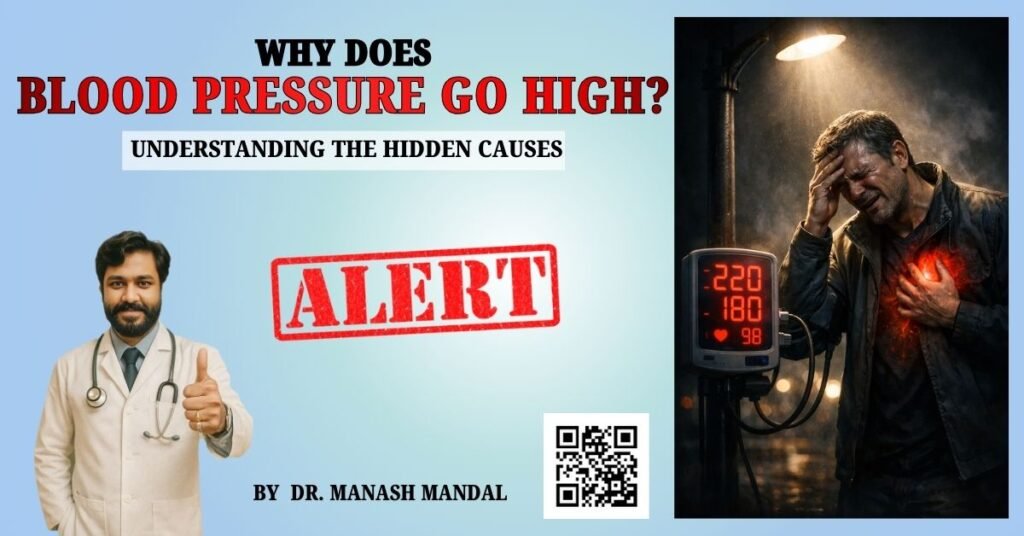
High blood pressure (hypertension) is one of the most common lifestyle-related health problems today. Many people discover it accidentally during routine checkups, while others learn about it only after symptoms appear. The biggest confusion is why blood pressure goes high even when a person feels “normal.”
Blood pressure does not rise suddenly without reason. It increases gradually due to hidden internal and lifestyle factors. This article explains why blood pressure goes high, using Ayurveda and modern medical understanding, in a simple and non-fearful way.
What Is Blood Pressure?
Blood pressure is the force exerted by circulating blood on the walls of arteries. It is measured as:
Systolic pressure (upper number): pressure during heart contraction
Diastolic pressure (lower number): pressure during heart relaxation
When this pressure remains consistently high, it is called hypertension.
Why High Blood Pressure Is Often “Silent”
Most people with high BP have no obvious symptoms, especially in early stages. That is why it is called a silent condition, not because it is mysterious, but because the body adapts slowly to rising pressure.
Symptoms usually appear only when BP stays high for a long time or starts affecting organs.

Ayurvedic Understanding of High Blood Pressure
Ayurveda does not describe hypertension as a single disease. It is understood as a systemic imbalance involving:
Pitta (heat and intensity)
Vata (irregular circulation)
Manas (mental stress)
Management focuses on:
Cooling and calming the system (Pitta imbalance and heat in the body)
Improving digestion and metabolism
Reducing stress load
Modern Scientific Explanation (Simplified)
From a modern medical perspective, high blood pressure results from increased resistance in blood vessels or increased blood volume. Factors such as excess sodium intake, stress hormones, poor sleep, obesity, and reduced physical activity contribute to vascular stiffness and sympathetic overactivity.
Medical research shows that lifestyle factors play a central role in most cases of primary (essential) hypertension. Long-term BP control depends not only on medication but also on dietary regulation, stress management, physical activity, and sleep quality. Early lifestyle correction can significantly delay or reduce the need for higher medication doses.
(≈150–170 words)
Hidden Causes Behind High Blood Pressure
1) Excess Salt Intake (Not Just Table Salt)
Salt increases fluid retention, which raises blood volume and pressure. The problem is not only visible salt, but:
Processed foods
Pickles, sauces, packaged snacks
Restaurant and fast food
Even people who “don’t add extra salt” may consume excess sodium unknowingly.
2) Stress and Mental Pressure
Chronic stress activates the sympathetic nervous system, leading to:
Blood vessel constriction
Increased heart rate
Persistent BP elevation
Mental stress is one of the most underestimated causes of hypertension.
3) Poor Sleep and Irregular Routine
Lack of proper sleep:
Increases stress hormones (cortisol)
Disturbs autonomic balance
Raises morning blood pressure
Late nights, screen exposure, and irregular sleep timing contribute silently.
4) Sedentary Lifestyle
Physical inactivity leads to:
Reduced vascular flexibility
Weight gain
Poor circulation
Even normal-weight individuals can develop high BP due to lack of movement.
5) Digestive and Metabolic Imbalance (Ayurvedic View)
According to Ayurveda, high BP is often linked with:
Pitta imbalance (heat, intensity, inflammation)
Vata disturbance (irregular circulation, stress)
Weak digestion (Mandagni) leading to Ama accumulation
This explains why BP often fluctuates with digestion, stress, and sleep.
6) Obesity and Central Fat
Excess abdominal fat increases:
Vascular resistance
Insulin resistance
Inflammatory markers
This combination makes BP control difficult even with medicines.
7) Hormonal and Age-Related Changes
With age:
Arteries lose elasticity
Blood vessels become stiffer
BP rises gradually
Hormonal changes, thyroid imbalance, and insulin resistance can also affect BP.
When High BP Becomes Dangerous
Medical attention is essential if BP is persistently high or accompanied by:
Headache with dizziness
Shortness of breath
Vision disturbances
Sudden weakness
Ignoring BP for long periods increases the risk of heart, brain, and kidney damage.
Can High Blood Pressure Be Controlled Naturally?
Yes, in early and moderate stages, BP can often be significantly improved by:
Reducing salt intake
Improving sleep
Managing stress
Regular physical activity
Correcting digestion and diet
Medicines are important when prescribed, but lifestyle correction remains essential even with medication.
Frequently Asked Questions (FAQs)
1) Can stress alone raise blood pressure?
Yes. Chronic stress is a major contributor to hypertension.
2) Does high BP always show symptoms?
No. Most people feel normal in early stages.
3) Is salt the only cause of high BP?
No not only salt . Stress, sleep, obesity, and inactivity also play major roles.
4) Can Ayurveda help manage high BP?
Yes, by addressing digestion, stress, and lifestyle imbalance.
5) Is BP reversible?
It can often be controlled effectively, especially when it is detected early.
Conclusion
High blood pressure does not rise without reason. It is the result of long-standing lifestyle, mental, and metabolic imbalances. Understanding the hidden causes helps reduce fear and improves long-term control.
Blood pressure management is not just about numbers. It is about restoring balance.